Yousry Azmy
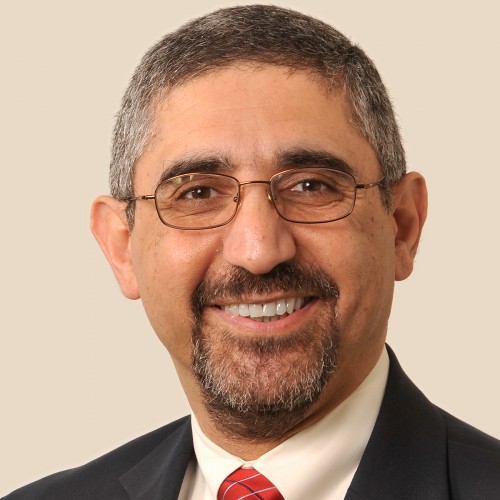
Duke Energy Distinguished Professor of Nuclear Engineering
Burlington Laboratory 2146
919-515-3385 [email protected]Publications
- A dynamically-truncated integral transport matrix low-order method for solving neutral particle transport problems , Annals of Nuclear Energy (2026)
- Multiphysics Continuous Shape Optimization of LWR Nuclear Reactor Components under Uncertainty , (2026)
- Multiphysics continuous shape optimization of LWR nuclear reactor components under uncertainty , Nuclear Engineering and Design (2026)
- Transient uncertainty quantification and Global Sensitivity Analysis of the open-source Molten Chloride Reactor Experiment (MCRE) using GP-PCA surrogate models , Nuclear Engineering and Design (2026)
- A Computational Tool Compatible with NEAMS Code Packages for Optimizing the Shape of Nuclear Reactor Components and of Whole Core Performance , (2025)
- A Diffusion Synthetic Acceleration Scheme for THOR's AHOT-C0 Method on Unstructured Tetrahedral Meshes , International Conference on Mathematics and Computational Methods Applied to Nuclear Science and Engineering (M&C 2025) (2025)
- Development and integration of a tool for physics-based shape and topology optimization in the MOOSE multiphysics simulation framework , Progress in Nuclear Energy (2025)
- Global sensitivity analysis using Gaussian process surrogate models & impact of thermophysical properties uncertainties on the steady-state operation of molten salt reactors , Annals of Nuclear Energy (2025)
- Hierarchical Shape Optimization of Nuclear Fuel Assemblies Using Multi-Level Pin to Assembly Analysis in MOOSE , Proceedings of TopFuel 2025: Nuclear Reactor Fuel Performance Conference (2025)
- The Data Integration with Modeled Predictions (DIMP) Approach to Computing the Radiation Source Distribution from the Responses of a Few Detectors , Inverse Problems in Radiative Transport Mini-symposium, Applied Inverse Problems Conference (2025)
Grants
We propose a comprehensive reactor-core-component shape optimization tool embedded in MOOSE and utilizing NEAMS physics codes. For parametric optimization, connecting TAO with MOOSE provides the basis for flexible and extendible capabilities to various NEAMS codes. For actual shape optimization we will develop 2 shape optimization algorithms: 1) discrete, based on a state-space search and NEAMS codes' automatic differentiation capabilities; 2) smooth, based on MOOSE���s displaced mesh capability.
This contract provides support for the INL through collaboration with NUC Universities (Oregon State University, Ohio State University and in this case specifically North Carolina State University). The goal is to more closely align the NUC research activities with the mission and objectives of the INL research directorates.
NC State University, in partnership with University of Michigan, Purdue University, University of Illinois at Urbana Champaign, Kansas State University, Georgia Institute of Technology, NC A&T State University, Los Alamos National Lab, Oak Ridge National Lab, and Pacific Northwest National lab, proposes to establish a Consortium for Nonproliferation Enabling Capabilities (CNEC). The vision of CNEC is to be a pre-eminent research and education hub dedicated to the development of enabling technologies and technical talent for meeting the grand challenges of nuclear nonproliferation in the next decade. CNEC research activities are divided into four thrust areas: 1) Signatures and Observables (S&O); 2) Simulation, Analysis, and Modeling (SAM); 3) Multi-source Data Fusion and Analytic Techniques (DFAT); and 4) Replacements for Potentially Dangerous Industrial and Medical Radiological Sources (RDRS). The goals are: 1) Identify and directly exploit signatures and observables (S&O) associated with special nuclear material (SNM) production, storage, and movement; 2) Develop simulation, analysis, and modeling (SAM) methods to identify and characterize SNM and facilities processing SNM; 3) Apply multi-source data fusion and analytic techniques to detect nuclear proliferation activities; and 4) Develop viable replacements for potentially dangerous existing industrial and medical radiological sources. In addition to research and development activities, CNEC will implement educational activities with the goal to develop a pool of future nuclear non-proliferation and other nuclear security professionals and researchers.
In a nuclear materials processing facility, it is important to account accurately for the fissile material that enters and leaves the plant to prevent or detect theft or misuse. During normal operation, small amounts of material stick to walls or get trapped in equipment. Over years, these small material ?holdups? accumulate into significant quantities, sometimes several kilograms. Thus, accurately estimating the holdup is an important component of material accounting. The proposed approach fully couples predictive computational radiation transport models while integrating all data. Since the problem is nonlinear, a Newton-type iterative method will find the best fit of the predictive model with the measurements. At each step, the sensitivities of the detector measurements with respect to the model parameters (for example, mass of fissile material) are computed using radiation transport simulators, for both neutrons and gamma rays. The flux calculations returned by the transport simulators are converted to the detector measurements using a previously-validated detector response function (DRF). At the end of each step, the difference between the computed and measured values of the response of the detector at selected locations in the vicinity of the holdup governs the change for the next iterative step.
This proposal is to request the continued participation of NCSU Nuclear Engineering in the National Academy for Nuclear Training Fellowship Program. The support level of one student per year at $25,000 is requested.
This proposal is to request the continued participation of NCSU Nuclear Engineering in the National Academy for Nuclear Training Fellowship Program. The support level of one student per year at $25,000 is requested.
The PI (Dr. Yousry Y. Azmy) from NC State University (NCSU) has a standing interest in the development and implementation of advanced numerical methods for solving radiation transport problems using the discrete ordinates approximation, and of advanced algorithms for solving the resulting systems of equations on multiprocessor platforms. Meanwhile Idaho National Laboratory (INL) as the designated nuclear energy lab in DOE’s national laboratory complex is spearheading efforts to modernize computational capabilities in the nuclear field, a field that has become heavily reliant (for good reason) on modeling and simulation. Among recent developments in both institutions that are relevant to this proposal are the radiation transport codes for unstructured meshes THOR at NCSU and RattleSnake at INL. While these codes are founded on drastically different methods they address the same physics and possess similar applications and objectives. Hence it would be valuable for the two research groups at INL and NCSU to share their experiences and coordinate the evolution of their respective methods, algorithms and codes. The work proposed here seeks to establish a formal framework for this cooperative effort.
We propose to create and administer a financial aid mechanism for graduate students in nuclear engineering to be named the North Carolina State University's Graduate Fellowship In Nuclear Engineering (NCSU-GFINE). The primary objective of NCSU-GFINE is to enhance the ability of NCSU's Department of Nuclear Engineering to recruit and retain outstanding individuals and to provide incentive to the sponsored graduate students to maintain high academic performance. In addition, the selection formula will slightly favor minorities, women, and persons with disabilities in order to further promote diversity in the department's graduate student population. Ultimately, the collective effort by US educational institutions to raise the admission standards and to diversify their graduate student populations, as proposed here for NCSU, will translate into a highly competent and diverse cadre of leaders for the nuclear engineering endeavor at large
The work performed under this subcontract supports an approved ORNL/NC State Joint Faculty Assignment with the Department of Nuclear Engineering (NE) at North Carolina State University and the Nuclear Security & Isotope Division at the Oak Ridge National Laboratory (ORNL). The work performed under this subcontract, by Dr. John Mattingly, will support the development and use of nuclear computational tools and methods for application in nuclear nonproliferation, nuclear security, and homeland security. Dr. Mattingly will be responsible for developing and utilizing computational methods for performing analyses of nuclear detection technologies for projects supported by the DOE/NNSA NA 22 Nonproliferation Research and Development programs, the NA42 Office of Emergency Services, the DHS Domestic Nuclear Detection Office, and the DOD Defense Threat Reduction Agency. Dr. Mattingly will engage with technical staff in the Nuclear Material Detection and Characterization Group and with other research groups at ORNL to support existing projects, develop joint proposals, and identify subjects and research programs for students from North Carolina State University. Dr. Mattingly is also expected to provide supervision and coordination of the students engaged in technical work with the Nuclear Material Detection and Characterization Group.
The work performed under this subcontract supports an approved ORNL/NC State Joint Faculty Assignment with the Department of Nuclear Engineering (NE) at North Carolina State University and the Nuclear Security Modeling Group of the Reactor and Nuclear Systems Analysis Division at the Oak Ridge National Laboratory (ORNL). The work performed under this subcontract by Dr. John Mattingly will support the development and use of nuclear computational tools and methods for application in nuclear nonproliferation, nuclear security, and homeland security. Dr. Mattingly will be responsible for developing and utilizing computational methods for performing analyses of nuclear detection technologies for projects supported by the DOE/NNSA nonproliferation programs, the DHS Domestic Nuclear Detection Office, and the DOD Defense Threat Reduction Agency. Dr. Mattingly will engage with technical staff in the Nuclear Security Modeling Group and with other research groups at ORNL to support existing projects, develop joint proposals and identify subjects and research programs for students from North Carolina State University. Dr. Mattingly is also expected to provide supervision and coordination of students that are engaged in technical work with the Nuclear Security Modeling Group.