Maria Herrera Quesada: Finding Home
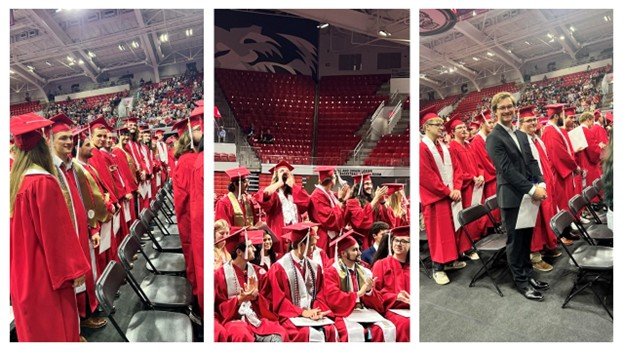
Featured: Maria Herrera Quesada, Spring 2026 Department of Nuclear Engineering Ph.D. graduate.
Tell us about your background.
I was born and raised in Puriscal, a mountain region in Costa Rica.
I have always been curious about how things work, which led me to study Physics and Mathematics as an undergraduate. While I was in school, I had the opportunity to work on a biomedical project in Auckland, New Zealand, connecting easy-to-make sensors with gastric wave mapping and their potential diagnostic applications. Later, after graduating and returning to Costa Rica, I worked as a research and development engineer at Hologic Inc., a biomedical company. Those experiences were some of the first and most memorable moments where I clearly saw how physics could translate into medical technologies that affect people’s lives.
Around that same period, I was also teaching part-time at the University of Costa Rica (UCR), where I learned more about Costa Rica’s and UCR’s efforts to develop its first cyclotron for radiopharmaceutical production. Seeing that connection between advanced technology, medicine and a real need in my home country made nuclear engineering feel very meaningful to me. It was not a straight path, but looking back, each step helped point me in that direction.
What drew you to NC State for your Ph.D.?
I came to NC State through the Fulbright program, which helps match students with strong graduate programs in their chosen fields. NC State stood out right away because of its nuclear engineering program, which is consistently ranked among the top in the country.
Being in the Research Triangle was also a big factor. Having NC State, Duke and UNC so close to each other creates an environment where research, collaboration, industry and different academic perspectives are constantly interacting. It meant access to a wider range of courses, people and ideas than I would have had in a more isolated setting, and that was very appealing to me.
On a more personal note, North Carolina also felt like a place where I could see myself living. I grew up surrounded by mountains and not too far from the beach in Costa Rica, so being somewhere that had both mattered to me. It made the transition feel a little more natural, especially when moving so far from home again.
What is interesting to you about your chosen field of study?
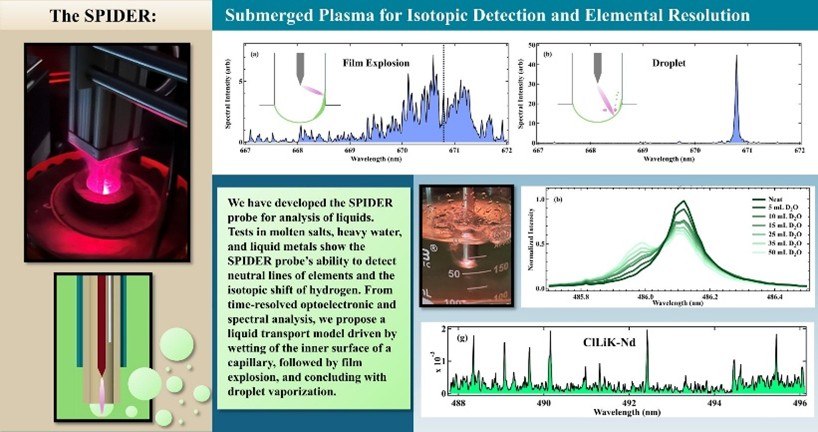
What I like most about this field is how it connects fundamental science with real-world applications. My doctoral research focused on plasma-based diagnostics for biomedical technologies, but through that work I realized how wide the range of plasma applications really is.
Before getting into this area, I had no idea plasma could be connected to so many different fields. It can be used in energy, medicine, food safety, hospital disinfection, semiconductor manufacturing and more. Because of that, this work forces you to think across disciplines. You have to understand pieces of physics, electrical systems, biology, materials science – and even quantum mechanics – depending on the application.
That variety is one of the things I enjoy most. It keeps the work from feeling narrow, and it trains you to look at problems from more than one angle.
“What surprised me most was how much the Ph.D. experience taught me outside of the technical work. I expected to grow as a researcher, but I did not fully expect how much I would have to learn about adapting, asking for help, changing direction and being patient with uncertainty.”
What was one of the best practical experiences you had at NC State?
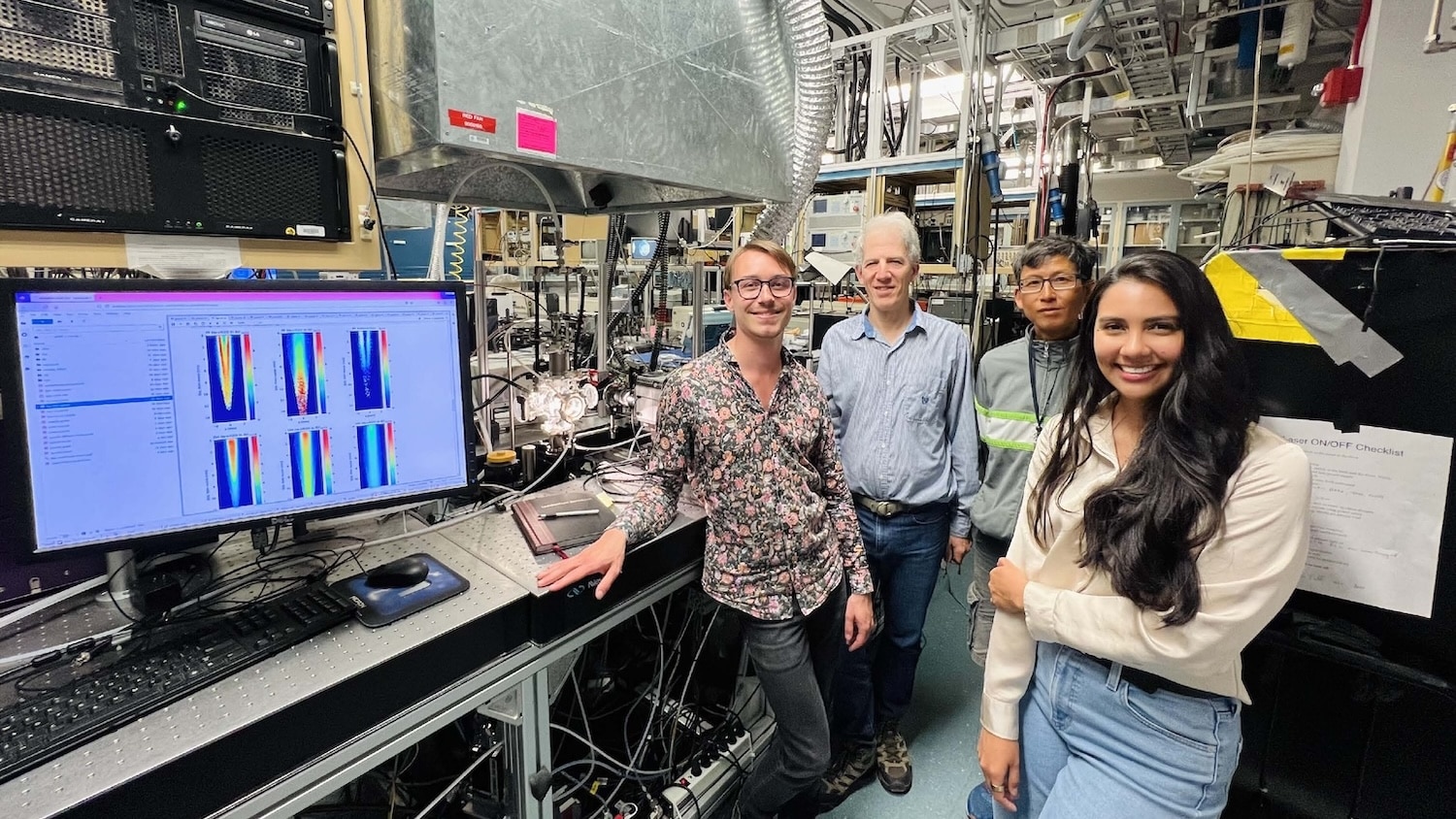
One of the most valuable practical experiences I had was the opportunity to do research at national laboratories. During my Ph.D., I spent time at Oak Ridge National Laboratory in Tennessee and Sandia National Laboratory in California.
Those experiences gave me a much broader view of what research can look like outside a university setting. Being in national lab environments, seeing large-scale projects and working around people with very different areas of expertise helped me understand how the work connects to bigger scientific, technological and national priorities. It also gave me confidence in my ability to adapt to different research environments.
Is there anything that surprised you over your years at NC State?
What surprised me most was how much the Ph.D. experience taught me outside of the technical work. I expected to grow as a researcher, but I did not fully expect how much I would have to learn about adapting, asking for help, changing direction and being patient with uncertainty.
The Covid-19 pandemic shifted a lot of plans, including parts of my research, and I had to figure things out as I went. That was difficult at times, but it also made me more flexible. I think that kind of growth is not always obvious when you begin a Ph.D., but it becomes one of the most important parts of the experience.

What activities outside of your classes did you get involved in?
A very important part of my time at NC State was the Crafts Center. I took countless classes there, and it became a place where I could learn in a completely different way from my academic work. It gave me a creative outlet, but it also gave me the joy of being a beginner again.
I started with stained glass and learned how to cut glass, solder pieces together and turn ideas into something beautiful and functional. Later, I got very involved in woodworking. I began with almost no experience, but with the help of the instructors, the tools and the classes, I kept building more skills. Over time, I learned enough to make my own furniture, including a bed, desks, large wall mirrors and other pieces. I even learned details like dovetails, which made the process feel even more special.
Those classes became one of the most meaningful parts of my life outside of my Ph.D. They reminded me that learning does not only happen in a lab or classroom, and that making things with your hands can be incredibly grounding. It is also something I now get to share with the people I love.
“Be open to the fact that your path may change. You can arrive with one idea of what your Ph.D. will look like and leave with a very different understanding of your field, your strengths and what you want next. That is not a failure. It is part of the process.“
What advice would you give to other students considering NC State’s nuclear engineering program, specifically for a Ph.D.?
Be open to the fact that your path may change. You can arrive with one idea of what your Ph.D. will look like and leave with a very different understanding of your field, your strengths and what you want next. That is not a failure. It is part of the process.
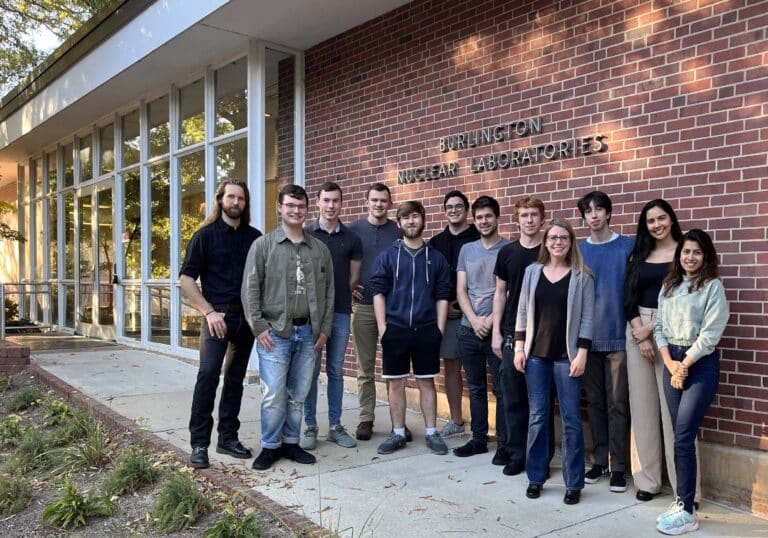
I would also tell them to look for mentors and community early. A Ph.D. is demanding, and it is much harder if you try to do everything alone. Ask questions, take opportunities even when they feel a little intimidating and allow yourself to grow into the work instead of expecting to know everything from the beginning.
How do you plan to celebrate your graduation?
In many ways, the best celebration has already happened, which is being able to come back to my home country after several years away. Being close to my family again, speaking my language every day, being back in my culture and enjoying Costa Rica with a new level of appreciation have all felt very special.
I also feel more aware now of the things I do not want to take for granted. Time with my family, my grandmother’s food, the mountains, the beaches and even ordinary weekends at home feel different after being away for so long. I am trying to be more present and enjoy those things as much as I can.
What’s next for you?
Coming back to Costa Rica was always part of the plan. My position at the University of Costa Rica was waiting for me, and returning was one of the reasons I pursued graduate studies abroad with support from both UCR and the Fulbright program. The goal was not only to receive that training, but to bring it back home.
I am now a physics professor at the University of Costa Rica, and I am excited to keep growing as a teacher, researcher and mentor. At the same time, I am also thinking about projects beyond the traditional academic path. These past years helped me realize that I am happiest when I can combine technical knowledge, creativity and building things in a practical way. So I am open to starting something of my own in the future, whether that is connected to technology, education or even a small woodworking space.
- Categories: