
Research

Research


Fusion Heating
Technology
The FPAC LAB develops radio-frequency (RF) ion sources for neutral beam injection (NBI) systems, one of the plasma heating methods used in magnetic confinement fusion devices. Current experimental platforms include the reduced-scale LUPIN ion source testbed, operating at 20 kW and 2 MHz, and the full-scale, full-power AMAROK system, designed for up to 200 kW operation in the 2 to 4 MHz range. Research focuses on plasma generation, RF power coupling, source optimization, and experimental demonstration of ion source technologies. The lab collaborates closely with the DIII-D National Fusion Facility to support future neutral beam upgrades.

Plasma-Facing
Materials Qualification
The lab investigates plasma-facing materials capable of surviving the extreme environments expected in future fusion reactors. Current efforts focus on additively manufactured tungsten developed in collaboration with NCSU’s Center for Additive Manufacturing and Logistics (CAMAL). These materials are evaluated using high-heat-flux electron beam testing and plasma exposure experiments to characterize thermal performance, surface evolution, and hydrogen retention. Future planned capabilities include an ion beam exposure facility and a thermal desorption spectroscopy setup. Work is also carried out collaboratively with Idaho National Laboratory (INL).

Charge Exchange
Neutral Modeling
The FPAC LAB uses computational models to study charge exchange neutral particles at the boundary of fusion plasmas, with emphasis on main chamber particle fueling and wall erosion. Current work includes comparisons between two-dimensional and fully three-dimensional neutral gas modeling and the impact on fueling in the tokamak pedestal region. These studies improve predictions of edge density pedestal structure in burning plasma devices. FPAC collaborates with Oak Ridge National Laboratory (ORNL) and Massachusetts Institute of Technology (MIT) on this research.
Fusion Plasma
Boundary Physics
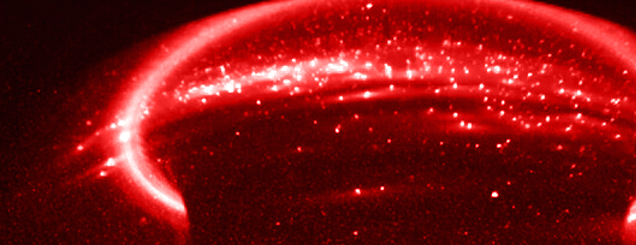
The FPAC LAB studies plasma boundary physics and wall conditioning techniques that improve plasma performance in magnetic confinement fusion devices. A research effort involves feedback control development for the Impurity Powder Dropper system on the KSTAR tokamak, enabling controlled wall conditioning and impurity injection experiments. This work has demonstrated improved plasma performance and reduced plasma contamination. The project is conducted in collaboration with Princeton Plasma Physics Laboratory (PPPL).

Fusion Plasma
Diagnostics
The lab contributes to the development and application of fusion diagnostics, including the LLAMA and ALPACA systems used for neutral density measurements on DIII-D. These diagnostics provide critical insight into plasma fueling and particle transport in the tokamak edge pedestal region. The FPAC LAB collaborates with PPPL and MIT on the development, improvement, and deployment of these diagnostic systems.