Yang Selected as 2026 SPIE Fellow
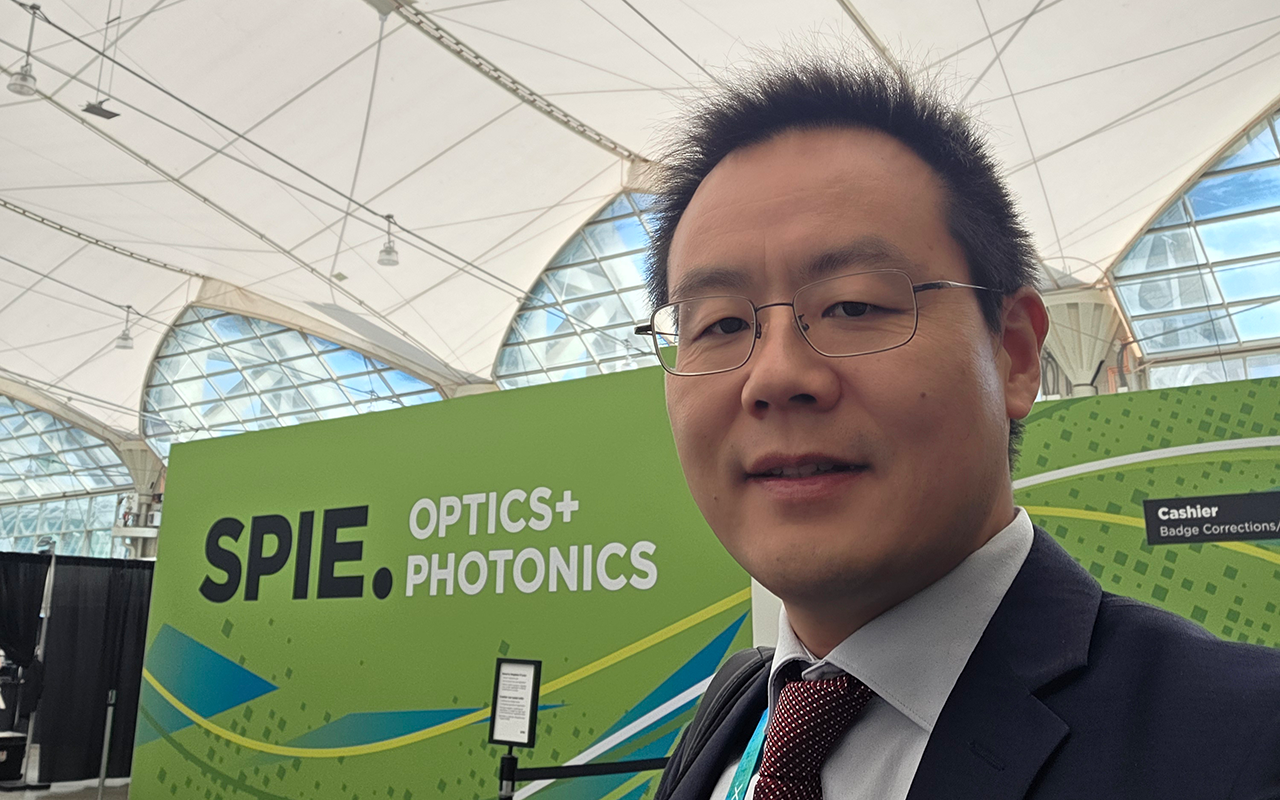
Ge Yang, professor in the Department of Nuclear Engineering, has been named a 2026 SPIE Fellow, one of the highest professional distinctions conferred by SPIE, the international society for optics and photonics.
“Being elected a Fellow of SPIE is a tremendous honor,” Yang said. “It represents recognition of a research career that has grown across several fields and has increasingly focused on connecting fundamental science with technologies that can address important engineering challenges.”
Since 1955, SPIE has recognized distinguished members as Fellows for their significant scientific and technical contributions to optics, photonics and imaging, as well as service to the community. As a university faculty scholar and lead of the Materials and Advanced Sensing Technologies (MAST) research group, Yang has made significant contributions to radiation detection and sensing technologies, while developing a broader interdisciplinary research program spanning materials, devices, radiation effects and technologies for demanding environments.
“I have been fortunate to work alongside talented students, researchers, colleagues and external partners,” he said. “Their ideas, expertise and collaboration have been central to the growth and impact of our research program.”
Yang’s research program integrates materials development, device engineering, irradiation testing, characterization and performance evaluation, with an emphasis on translating fundamental discoveries into practical technologies. His group’s current work spans wide-bandgap semiconductor detectors and photodetectors, radiation-tolerant devices, emerging detector materials, corrosion-resistant coatings and other materials and technologies for nuclear applications and challenging operating environments.
“Looking ahead, my research team and I are focused on translating discoveries in materials and devices into practical solutions that can be validated under realistic operating conditions,” Yang said. “These innovations could enable new capabilities in nuclear energy, scientific instrumentation, and industrial and environmental monitoring, while improving the durability, resilience and performance of engineered systems in demanding environments.”
Yang also champions partnership and has strengthened the department’s collaboration with national laboratories, industry and government.
“Going forward, I hope to continue expanding these partnerships, developing new research directions and creating opportunities for students and early-career researchers to contribute to emerging areas of materials, sensing and nuclear engineering,” Yang said.


