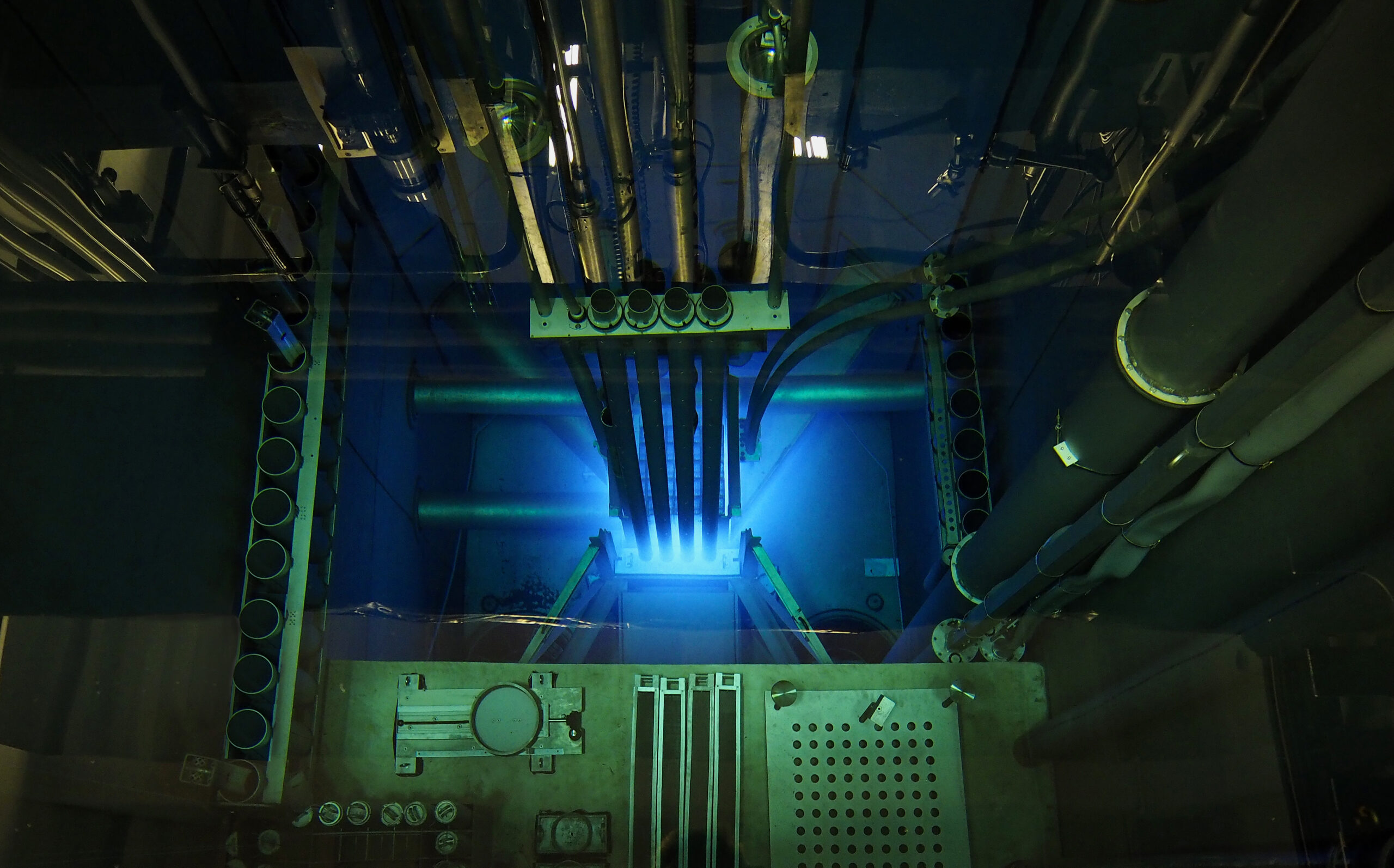
Ph.D. Student Helps Advance Fusion Energy Research During Internship in Germany
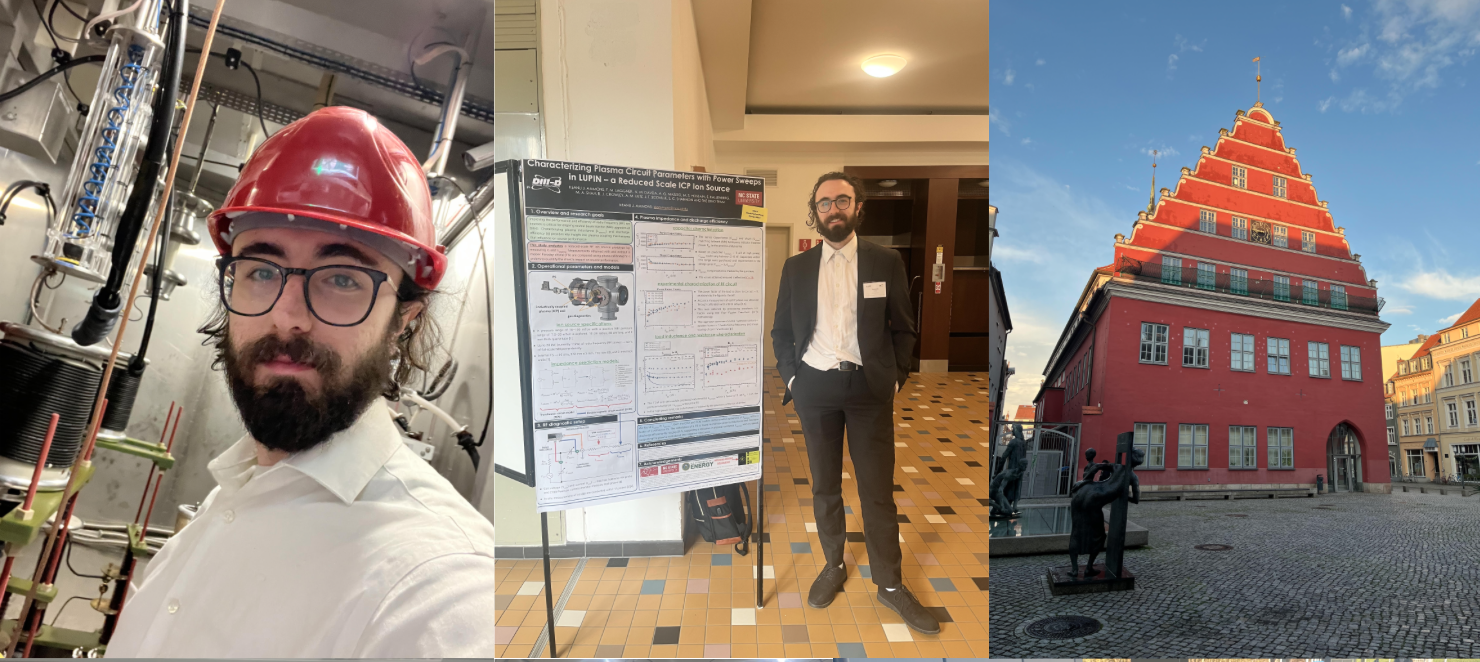
Keanu J. Ammons returned to Raleigh this fall semester with new knowledge after a three-month research experience at one of the world’s leading fusion energy research centers.
The third year Ph.D. student in NC State’s Fusion Plasma Auxiliary Characterization (FPAC) Laboratory recently completed his internship at the Max Planck Institute for Plasma Physics in Greifswald, Germany.
The internship was built directly upon Ammons’s research in the FPAC Laboratory. At NC State, he designed and constructed radio frequency (RF) systems for LUPIN, a reduced-scale ion-source prototype used to study inductively coupled plasma production and evaluate multistrap antenna designs driven by phase-locked RF generators.
At the Max Planck Institute, Ammons extended that experience to a new question: How do isolation transformers alter the electrical behavior of a high-power ion-source circuit? Isolation transformers are important components in neutral beam systems, but their effects on impedance matching have not been fully quantified.
Ammons compares impedance matching to assembling a puzzle: each circuit component must fit together correctly to produce the intended result. However, adding a transformer can change the “picture” while the puzzle is being assembled. His research aims to better quantify that change and help streamline the design and operation of high-power RF systems for future ion sources.
Combining Tabletop Experiments with High-Power Operation
During the internship, Ammons assembled two reduced-scale circuits that modeled the ion source, matching network, transformer and plasma discharge using micro- and milliwatt-level power. These tabletop experiments made it possible to rapidly investigate circuit behavior before moving to the full-scale system.
He performed isolated voltage and current measurements with oscilloscopes and used vector network analyzers to collect S-parameter measurements, including S11 and S21 data. He also developed Python and MATLAB scripts to process, visualize, and evaluate experimental results.
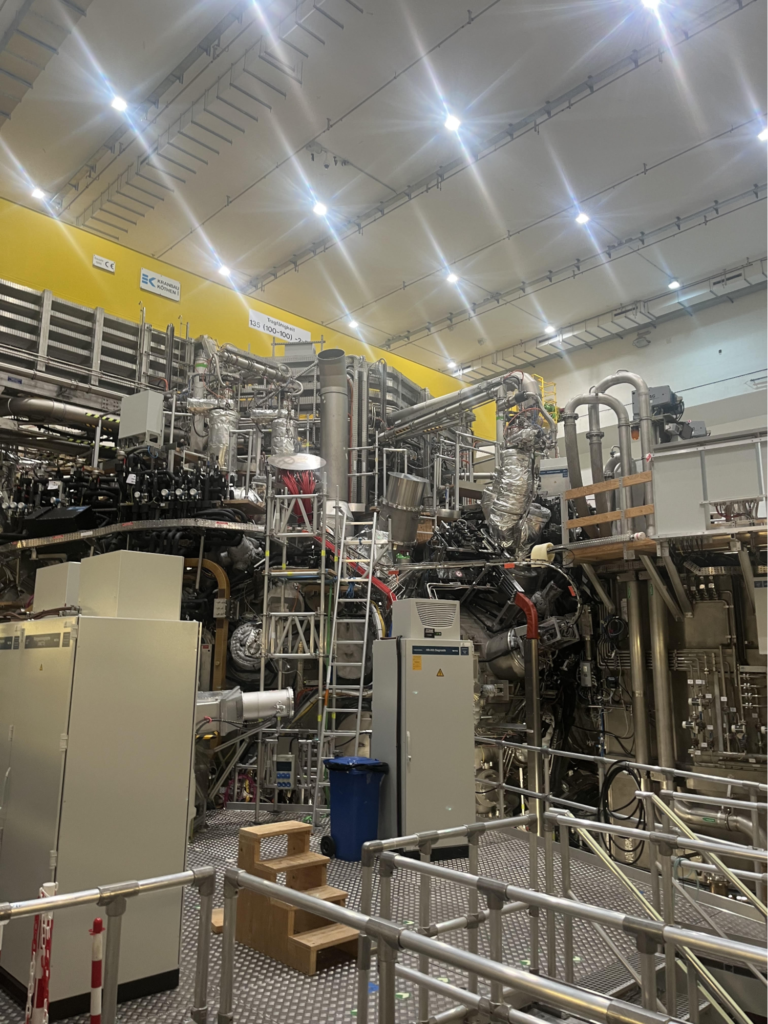
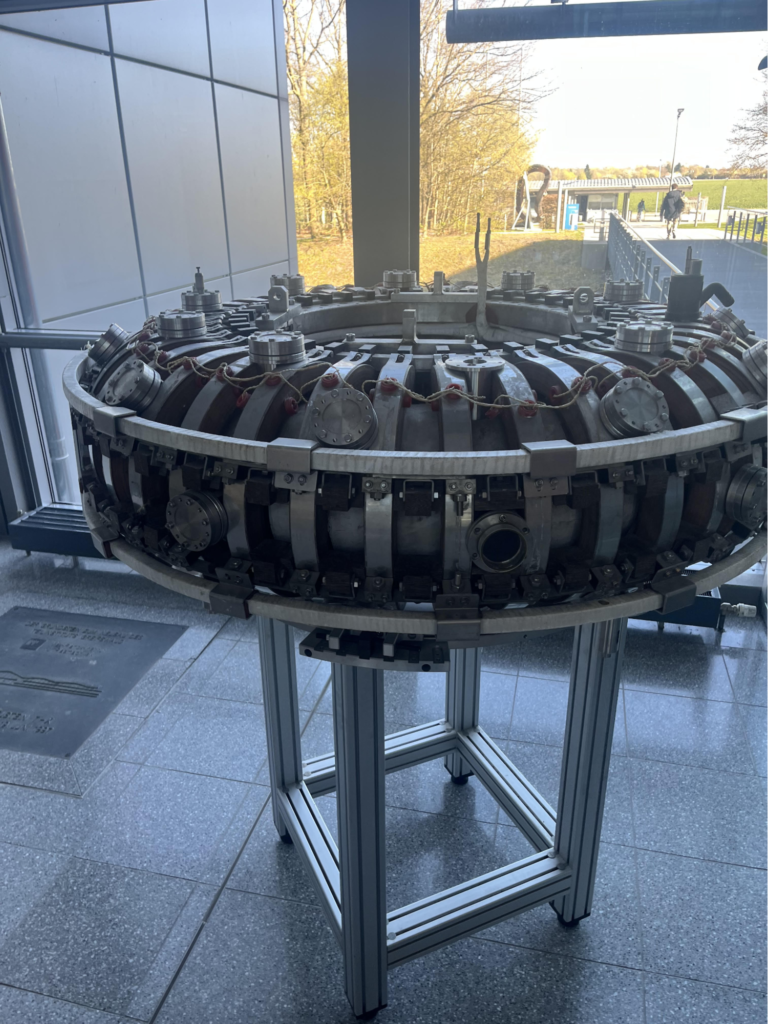
Near the end of the internship, Ammons supported the team working on the Wendelstein 7-X, which is the world’s largest stellarator-type nuclear fusion device. Ammons collected experimental data during high-power operation between approximately 40 and 80 kilowatts. The work required close communication with scientists and technicians to evaluate each experimental run and determine the next measurement needed.
“Gaining practical experience through hands-on research, trial and error, and collaboration enables a level of personal growth and understanding that is difficult to obtain in a classroom alone,” Ammons said.
Developing New Approaches to Transformer Characterization
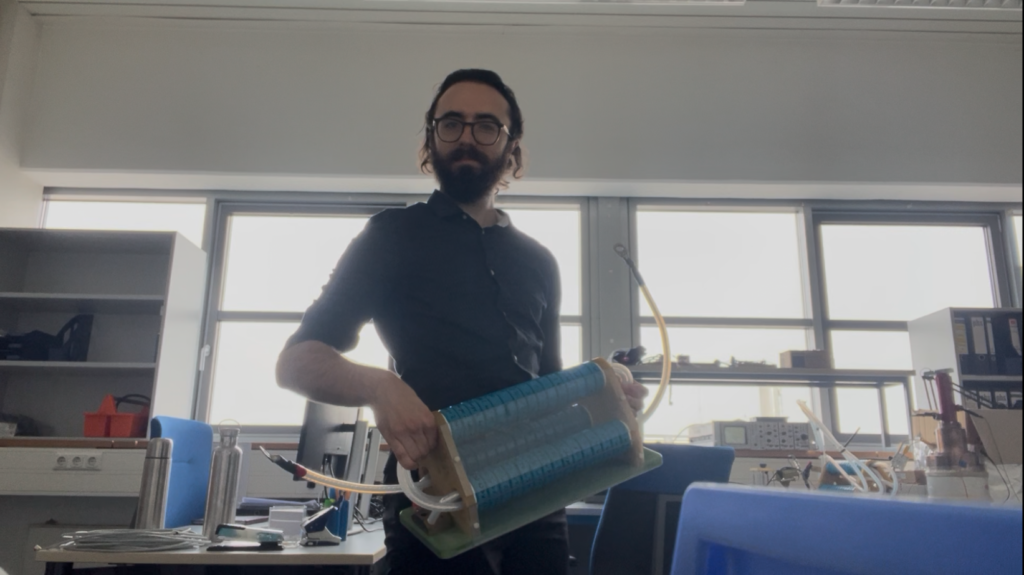
One of Ammons’s primary contributions was applying two-port network analysis to RF isolation transformers used in ion-source impedance-matching circuits. Although two-port methods are commonly used in small-signal electrical analysis, straightforward models for these transformers are not widely available in plasma-engineering literature.
Ammons also tested a reduced-scale method for predicting the electrical response of a full transformer using an individual ferrite ring. Compared with constructing a complete transformer or developing a detailed computational model, ferrite-ring testing could offer researchers a faster and more accessible method for evaluating transformer designs.
The internship produced conference-quality presentations, publication-ready figures, and experimental data that Ammons is now incorporating into a journal manuscript. He also prepared technical reports documenting the experimental procedures and RF measurement methods so they can support his continuing research at NC State.
Professional Growth Through International Collaboration
Beyond the technical work, Ammons gained experience communicating research to an international scientific audience. He delivered three extended research presentations at IPP, received detailed feedback from the scientific team, and presented an RF research poster at the 31st Symposium of Plasma Physics Technology in Prague.
He said the collaborative culture at IPP was one of the most valuable parts of the experience.
“Every scientist I interacted with was extremely knowledgeable and willing to help students better understand their research,” Ammons said. “The Max Planck Institute succeeds in creating a culture of collaboration.”
A particularly memorable moment came when he entered the high-voltage enclosure surrounding the neutral beam ion source. The system includes components designed to withstand tens of kilovolts, providing Ammons with a close-up view of the engineering required for full-scale neutral beam operation.
Living in Germany also required him to adapt to a new language and culture. Everyday activities such as shopping, navigating public transportation, and ordering food became opportunities to learn through experience. Outside the laboratory, Ammons visited Prague, Dresden, the Baltic coast, and historic sites throughout Germany.
Bringing New Knowledge Back to FPAC
Ammons plans to incorporate the measurement techniques, analysis scripts, and transformer-modeling methods developed at IPP into his ongoing research in the FPAC Laboratory. The experience has also strengthened his interest in pursuing a future postdoctoral or industry position involving RF systems, plasma engineering, or fusion technology.
He encourages other students to pursue international research opportunities and to make deliberate use of every available moment.
Ammons summarized the experience with a German proverb he encountered during his internship: “Jeder ist seines Glückes Schmied” — “Every person is the architect of their own fortune.”